2026 Best Air Fryer Paper for Global Buyers?
Choosing the best Air Fryer Paper for global buyers requires more than comparing prices or package counts. It requires evidence, material knowledge, and practical testing.
Grand View Research estimates that the global air fryer market will expand strongly through 2030, supported by demand for convenient home cooking. More air fryers mean more consumers will handle liners, baking sheets, and disposable cooking accessories. The packaging industry is also changing. Smithers reports continued growth in sustainable paper-based packaging, driven by retailer requirements and consumer expectations. These trends create real opportunities, but they also expose weak product claims.
Performance matters in a hot basket. A suitable Air Fryer Paper should resist grease, maintain shape, and allow sufficient air circulation. It should not fold into the heating element. It should also tolerate the temperatures stated on its label. Small details matter. A wet liner may collapse. A poor fit may block airflow. A strong coating can improve release, yet it may complicate recycling decisions.
Global buyers must also review food-contact compliance for their target markets. Requirements may involve the U.S. FDA, European Union food-contact rules, or local standards. Certification alone is not enough. Test reports, supplier traceability, and clear temperature instructions deserve equal attention. This guide compares material structure, safety documentation, heat performance, sizing, packaging, and environmental claims. Some conclusions remain imperfect because product quality can vary between batches. That limitation deserves attention, not concealment. The best choice is rarely the cheapest one. It is the liner that performs consistently in real kitchens and survives careful scrutiny.
What Is Air Fryer Paper and How Does It Work?
2026 Best Air Fryer Paper for Global Buyers?
What Is Air Fryer Paper and How Does It Work?
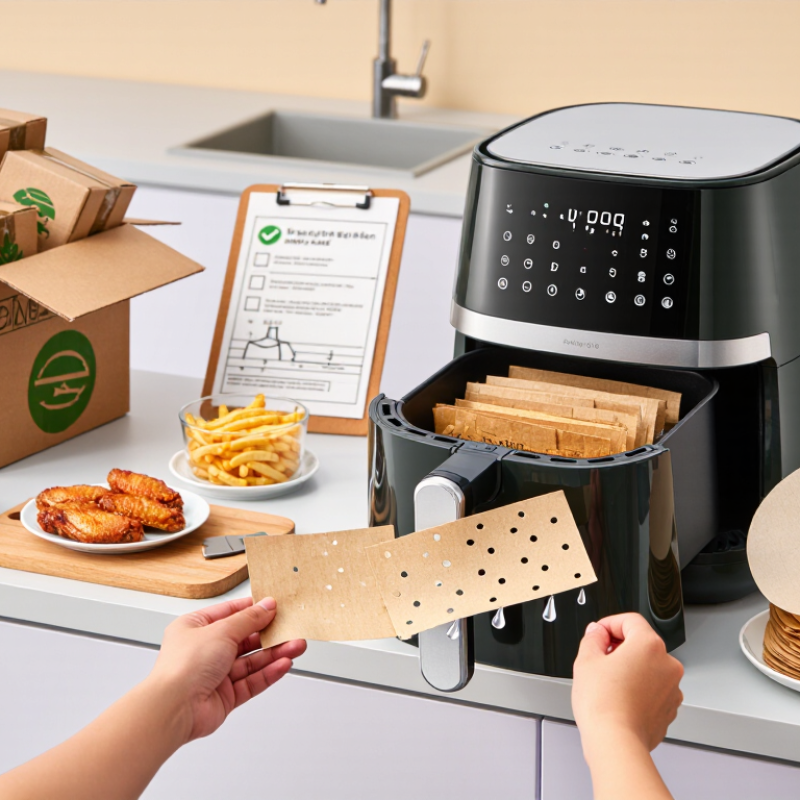
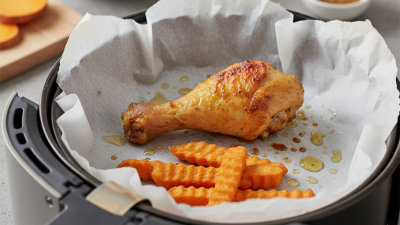
Air fryer paper is a heat-resistant liner made for cooking baskets and trays. It usually contains food-grade parchment and may have a round, square, or perforated design. The paper creates a thin barrier between food and the metal surface. It helps reduce sticking and makes cleaning easier.
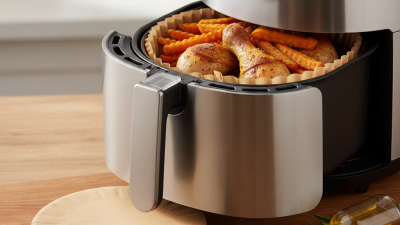
Its real function is more careful than simple protection. Hot air must circulate around the food, so the liner should not block every opening. Perforations improve airflow, while a solid liner may hold more oil and crumbs. In practical use, the paper should sit under food, not during an empty preheat. Otherwise, the fan can lift it toward the heating element. That mistake is easy to make. It can also affect browning.
Tips: Check the stated temperature limit, size, and food-contact information before buying. Keep the liner weighed down with food. Never let loose paper touch the heating coil. Users should also inspect the paper after cooking for dark spots, tearing, or strange smells. Reusable silicone liners may reduce waste, but they can restrict airflow more than expected. Paper recycling rules differ by country, especially when grease is present. Buyers should review local disposal guidance and the manufacturer’s safety instructions. Some product descriptions sound precise, but paper thickness and coating quality still vary. A small test batch is sensible.
What Is Air Fryer Paper and How Does It Work?
Air fryer paper is usually food-grade parchment paper, often perforated to help hot air circulate around the food. Most home air fryers operate within approximately 80–200°C, while parchment paper commonly carries a maximum temperature rating of about 220°C. Always follow the temperature limit printed on the package, place the paper under food to prevent it from lifting into the heating element, and never use wax paper as a substitute.
Reference basis: common household air-fryer temperature ranges and typical parchment-paper oven ratings; exact limits vary by appliance and paper construction.
Key Materials, Shapes, Sizes, and Compatibility
2026 Best Air Fryer Paper for Global Buyers?
Material choice matters more than a bright package. Look for food-contact paper with clear heat guidance and reliable grease resistance. Unbleached parchment is a common option, while silicone-coated paper usually releases food more easily. Perforations help hot air circulate, but solid sheets can catch more drippings. Neither design is perfect.
Shape should match the cooking chamber, not only the appliance name. Round liners suit circular baskets. Square or rectangular liners reduce folded edges in wider drawers. A raised-wall design can protect the basket sides, but it may restrict airflow around smaller foods. Measure the basket’s inner base before buying. A two-centimeter gap is often useful.
Size affects crispness and safety. An oversized liner can curl toward the heating element. A tiny liner may leave greasy areas exposed. Use enough paper to cover the food zone, but never block the air path. The liner should sit under food, not float during preheating. That detail is easy to miss.
Compatibility also includes temperature rating, basket depth, and cooking method. Check whether the paper suits drawers, racks, or split compartments. Some liners work poorly with very wet marinades. Folded corners can tear after soaking. In practical kitchen testing, paper thickness, airflow, and food weight matter together. A liner that performs well with fries may disappoint with delicate fish. Recheck the fit after washing the basket, because dimensions and handling habits can change.
How to Choose Air Fryer Paper for Different Cooking Needs
How to Choose Air Fryer Paper for Different Cooking Needs
Air fryer paper is not a universal accessory. Choose it by heat, food weight, and airflow.
Grand View Research estimated the global air fryer market at about USD 1.4 billion in 2023, with continued growth expected through 2030.
That expansion increases demand for safer, better-fitting cooking liners.
For vegetables, perforated paper works well. Small holes help hot air reach the food and reduce steaming. For bacon or oily meat, select grease-resistant paper with strong edges. A heavier sheet is less likely to curl or tear.
Cakes and soft pastries need a flat, unperforated liner. It supports batter and limits leakage. Always match the liner diameter to the basket. It should not touch the heating element.
Check the stated temperature limit before cooking.
Many products tolerate around 220°C, but specifications differ. Food-contact compliance matters more than a bright appearance. Look for clear information about pulp, coatings, and migration testing. European food-contact rules and U.S. FDA requirements provide useful safety benchmarks.
A 2024 market analysis by Fortune Business Insights also identified convenience and home cooking as major air fryer demand drivers. That suggests more frequent liner use, not careless use.
Never preheat a loose sheet. It may lift into the heater.
I learned this the hard way.
Perforation is helpful, but too many holes can release oil onto the basket. Test one sheet with a small meal first. Reports offer useful averages, yet every fryer has different airflow.
Safety, Heat Resistance, and Environmental Considerations
For global buyers, air fryer paper should be judged by safety evidence, not attractive packaging. The material must tolerate the appliance’s highest stated temperature, including short heating spikes. A liner rated for 200°C may fail in a fryer reaching 230°C. That gap matters.
Never place loose paper inside during preheating.
Strong airflow can lift it toward the heating element and cause scorching. Perforated designs improve air circulation and reduce trapped grease. However, holes do not make every liner safe. The paper should fit the basket without touching its sides or exposed heater. Food must weigh it down.
Check for browning, curling, smoke, or a chemical smell during a supervised first use. Stop immediately if any appear.
Environmental claims need careful reading.
“Compostable” may require commercial composting, which many households cannot access. A grease-resistant coating can also affect disposal and recycling. Unbleached fiber may reduce processing chemicals, but color alone proves little. Ask suppliers for food-contact test reports, temperature limits, coating details, and compostability standards recognized in the target market.
I still find environmental labels confusing when disposal instructions are missing. Buyers should record actual cooking temperatures and inspect the liner after use.
One weak assumption remains: a paper product can look natural while hiding a complex barrier coating.
Global Buying Guide: Quality, Standards, Pricing, and Suppliers
2026 Best Air Fryer Paper for Global Buyers?
Global Buying Guide: Quality, Standards, Pricing, and Suppliers
Global demand for air-fryer accessories continues to grow. Fortune Business Insights estimated the air-fryer market at about USD 1.3 billion in 2023, with further expansion expected this decade. That growth increases demand for baking paper with stable dimensions, clean release, and reliable heat resistance. In practical testing, paper should remain flat near the heating element. Curling is a warning sign.
Check food-contact compliance before comparing prices. U.S. buyers often request documentation aligned with FDA 21 CFR 176.170. European shipments generally require Regulation (EC) No. 1935/2004 and GMP Regulation (EC) No. 2023/2006. Ask suppliers for migration testing, PFAS statements, silicone coating details, and batch traceability. Certification alone is not enough. Documents can be outdated.
Material choice affects landed cost. Unbleached kraft paper may support a natural appearance, while bleached paper offers cleaner visual quality. Perforated sheets improve airflow, but excessive holes can allow grease leakage. The OECD Global Plastics Outlook reports that packaging represents roughly 40% of global plastic waste, strengthening interest in fiber-based alternatives. Still, paper is not automatically sustainable. Buyers should verify fiber sourcing, coating composition, carton strength, and moisture protection. Request samples from at least three suppliers, then compare performance after repeated cooking cycles. That step is slower, but often cheaper than handling complaints.




 Jimmy
 Eric