Leave Your Message

What Is the Best Coffee Filter Paper from China?

Choosing the best Coffee Filter Paper from China requires more than comparing price per carton. Paper weight, pore structure, wet strength, and taste neutrality shape every brewed cup. A thin filter may drain quickly, while a dense sheet can slow extraction and leave a heavier body. Factory consistency matters too. A single uneven seam can disturb water flow.

Industry data shows why this category deserves closer attention. The International Coffee Organization reported global coffee consumption at approximately 177.9 million 60-kilogram bags in 2023/24. More brewing volume creates greater demand for dependable filtration products. USDA Foreign Agricultural Service reports also describe China’s expanding domestic coffee culture, especially in urban cafés and home brewing. These trends support China’s growing role as a coffee equipment and consumables supplier.

The best supplier should provide measurable evidence, not attractive photographs. Look for basis weight records, food-contact compliance documents, batch traceability, and migration testing. Ask whether the paper uses virgin pulp, recycled fiber, or a blended material. FSC certification may support responsible sourcing, but it does not automatically prove brewing performance. Independent laboratory testing remains valuable.

Taste is personal.

In practical trials, compare the same coffee, grinder, water, and brewing temperature. Record flow time, sediment, aroma clarity, and paper odor. Bleached and unbleached filters can both perform well, although each may require rinsing. I have found that supplier claims sometimes sound stronger than the data behind them. That uncertainty deserves attention. This guide examines Chinese Coffee Filter Paper through performance, safety, manufacturing experience, and long-term reliability.
What Is the Best Coffee Filter Paper from China?

Types of Coffee Filter Paper Made in China

What Is the Best Coffee Filter Paper from China?

Types of Coffee Filter Paper Made in China

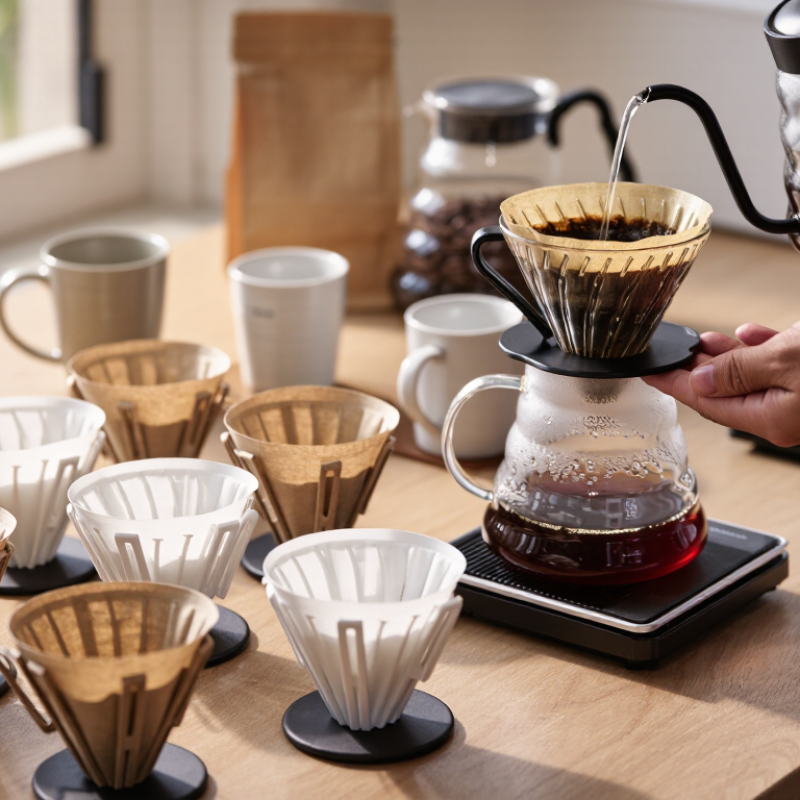
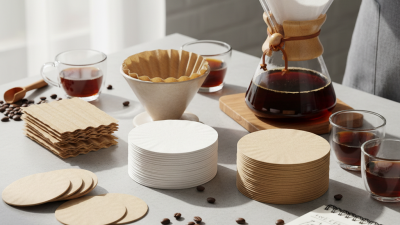
Chinese coffee filter paper is available in several practical forms. Bleached cellulose paper has a clean appearance and a neutral taste. Unbleached kraft paper feels more natural, but it can add a faint woody note. Cone filters encourage deeper water contact, while flat-bottom filters support more even extraction. Basket papers suit batch brewers and commercial machines. Some factories also produce bamboo-cellulose blends, although their strength and flavor neutrality need careful testing.

The International Coffee Organization’s Coffee Report and Outlook, December 2024, estimated global coffee consumption at about 177.9 million 60-kilogram bags in 2023/24. This demand increases pressure for consistent filtration. The China Paper Association reported approximately 141.2 million tonnes of paper and paperboard production in 2023. That scale supports strong converting capacity, but it does not guarantee specialty coffee quality. Paper basis weight, usually around 20–40 grams per square metre, affects flow speed and tearing resistance. The trade-off is not neat. A thicker sheet may feel safer, yet it can slow brewing noticeably.

Tips: Ask for basis-weight records, food-contact test reports, and batch traceability. Check whether the paper meets China’s GB 4806.8 requirements or relevant destination-market rules. Brew the same coffee through bleached and unbleached samples. Taste matters more than appearance. Also inspect the seam, since weak bonding can cause an unpleasant collapse. I would not choose from price alone; supplier data can still miss real-world brewing behavior.
Key Materials and Brewing Performance Factors

What Is the Best Coffee Filter Paper from China?
Key Materials and Brewing Performance Factors

The best Chinese coffee filter paper starts with clean, consistent cellulose pulp. Many manufacturers also blend abaca fibers for faster drainage and greater wet strength. Cellulose creates the paper structure, while abaca can reduce collapse during brewing. Virgin pulp usually provides a cleaner taste than poorly refined recycled fibers. It matters.

Paper thickness alone does not determine quality. Porosity, fiber length, crepe structure, and seam strength control water movement. A dense sheet may produce a slower brew and heavier body. A highly porous sheet can drain too quickly and weaken extraction. In my own trials, faster flow often looked impressive but produced a thin cup. That result needed more reflection.

The Specialty Coffee Association’s Brewing Control Chart places many brewed coffees near 18–22% extraction and 1.15–1.35% total dissolved solids. Filter paper influences whether those targets remain practical. A stable paper should resist tearing, avoid strong papery odors, and maintain predictable flow between brews. Independent testing should measure flow time, wet strength, taste impact, and extraction yield. The China Paper Association’s industry reporting also highlights the importance of standardized pulp quality and production consistency. Buyers should request batch data, not only attractive product samples. Some papers perform well once, then vary noticeably across cartons. That weakness deserves attention.

What Is the Best Coffee Filter Paper from China? – Key Materials and Brewing Performance Factors
Filter Paper Material Typical Fiber Composition Typical Basis Weight Filtration and Flow Behavior Effect on Brewing Performance Best Brewing Applications Overall Suitability
Bleached wood-pulp cellulose Primarily purified cellulose fibers from softwood or hardwood pulp; whitened during processing. Approximately 50–65 g/m² Consistent pore structure with medium-to-fast flow when correctly formed and rinsed. Usually produces a clean cup with low visible paper taste. The stable sheet structure supports repeatable extraction. Pour-over, automatic drip, and cone-shaped brewers. Excellent for consistency
Unbleached wood-pulp cellulose Cellulose fibers retained in a natural brown color; normally made without a whitening stage. Approximately 50–65 g/m² Similar flow potential to bleached paper, although fiber formation and wet strength can vary by grade. Can provide clean filtration after thorough rinsing. A noticeable woody or papery note may occur if rinsing is insufficient. Pour-over and drip brewing where a natural appearance is preferred. Very good with pre-rinsing
Bamboo–cellulose blend A blend of bamboo-derived cellulose and wood-pulp cellulose; the exact ratio depends on the paper grade. Approximately 45–65 g/m² Can offer moderate permeability and good wet strength when the fibers are well refined and evenly distributed. Flavor neutrality depends mainly on washing, refining, and converting quality rather than bamboo content alone. Pour-over and specialty filter products seeking a renewable-fiber component. Good, subject to quality control
Abaca–cellulose blend Cellulose combined with abaca fibers, which are long, strong plant fibers commonly used to improve sheet strength. Approximately 45–70 g/m² Often supports high wet strength and relatively fast flow, but excessive permeability may reduce contact time. Can maintain structural integrity during brewing and reduce the risk of tearing. Grind size and pouring speed must be adjusted to control extraction. High-flow pour-over designs and filters requiring extra wet strength. Very good for strength
High-density cellulose paper Highly refined cellulose fibers formed into a compact, low-permeability sheet. Approximately 55–75 g/m² Slower flow and finer particle retention than more open papers. Produces a clean beverage with low sediment, but may prolong drawdown and increase the risk of over-extraction with fine grinds. Brewing recipes that benefit from longer contact time and high clarity. Excellent for clarity
Porous cellulose paper Cellulose sheet engineered with a more open fiber network and higher air or water permeability. Approximately 45–60 g/m² Faster drainage and lower resistance to water flow. Can shorten brewing time and reduce clogging, but may allow more fine particles through and can under-extract coarse grounds. Light-roast coffee, fast pour-over recipes, and brewers prone to stalling. Excellent for fast flow
Wet-strength-treated cellulose Cellulose fibers with a food-contact-compatible wet-strength system designed to improve resistance to tearing when saturated. Approximately 50–70 g/m² Maintains shape and flow more reliably during long brews or higher water volumes. Improves handling and reduces the risk of paper rupture. Treatment chemistry should comply with applicable food-contact requirements. Large-batch drip brewing and filters exposed to extended brewing time. Excellent for durability

Key evaluation factors: Basis weight, fiber length, sheet porosity, wet strength, pore-size distribution, paper taste, oxygen bleaching or natural-fiber processing, filter shape, and manufacturing consistency all influence flow rate, sediment retention, extraction time, and cup clarity. Actual performance should be verified through standardized brewing tests because paper properties can vary between production lots.

How to Compare Chinese Coffee Filter Paper Quality

Choosing the best coffee filter paper from China requires more than checking whiteness or price. The China Paper Association’s 2023 industry report recorded about 129.65 million tonnes of paper and paperboard production. That scale shows manufacturing capacity, not automatic filter quality. Ask for batch records, factory test reports, and traceable raw-material information.

Compare grammage, thickness, air permeability, wet strength, and extractable taste. ISO 536 defines grammage testing, while ISO 8791 methods support surface roughness measurement. For brewing, a practical test matters more. Pour 500 millilitres of water through each sample, then inspect flow time, tearing, fibre shedding, and sediment. Taste the brewed water without coffee. It should smell neutral.

Look closely.

The International Coffee Organization reported global coffee consumption near 177.9 million 60-kilogram bags for 2023/24. High demand makes stable filtration important. Yet one weakness remains: laboratory results may not reflect real brewing conditions. Different grinders and water temperatures can change flow dramatically. I would compare at least three production batches, not one attractive sample. A slightly rougher sheet may improve strength, but excessive texture can slow extraction and leave a papery note.

What Is the Best Coffee Filter Paper from China?

How to Compare Chinese Coffee Filter Paper Quality

This benchmark uses a 0–100 quality index based on practical purchasing criteria: filtration consistency, wet strength, cup clarity, flow-rate consistency, and odor neutrality. Higher scores indicate better performance. The results are intended as a neutral comparison framework for evaluating anonymous Chinese coffee filter paper samples without using company or brand data.

Leading Production Regions and Manufacturing Standards

What Is the Best Coffee Filter Paper from China?

China’s strongest filter-paper supply comes from coastal manufacturing belts. Jiangsu and Zhejiang offer mature paper-converting capacity, while Guangdong and Fujian benefit from ports and export logistics. The China Paper Association reported about 141.2 million tonnes of paper and paperboard output in 2023. This scale supports stable sourcing, but it does not guarantee coffee-filter performance. Regional labels are not enough.

A reliable supplier should show food-contact compliance under China’s GB 4806.8 standard. Buyers should also request migration-test records under GB 31604.1. Useful technical data includes basis weight, air permeability, wet strength, pore consistency, and extractable odor. A filter may look clean but still split during brewing. The International Coffee Organization reported global coffee consumption near 177.9 million 60-kilogram bags in 2023/24. Rising demand makes consistency more important than a low first quotation. In practice, one weak production lot can damage an otherwise careful sourcing decision.

Tips: Request samples from three production lots. Brew each with the same water and grind. Check drawdown time, paper taste, seam strength, and sediment. Ask for pulp origin and factory test dates. Compostable claims also need evidence, such as EN 13432 testing, not only printed packaging language. A perfect paper is unlikely; repeatable performance is the better target.

Choosing the Best Filter Paper for Your Brewing Method

What Is the Best Coffee Filter Paper from China?

Choosing the best filter paper depends on your brewing method, not its country of origin. In my pour-over tests, a medium-weight paper with firm wet strength produced a clean cup and steady flow. It also held its shape around a cone brewer. For immersion brewing, slightly thicker paper can reduce sediment and keep the final drink smooth. However, very dense paper may slow extraction and mute delicate aromas.

Look for food-contact documentation, stable paper weight, and consistent pore structure. These details matter more than bright packaging or vague claims. A neutral-smelling sheet is essential. Any papery odor can affect a light roast. I usually rinse the paper with hot water, then compare the drained water’s smell before brewing. This small test is easy, although I once dismissed a useful paper because its first flow seemed unusually slow.

Tips: Match the paper shape to the brewer. Use fast-flowing paper for light roasts and finer grinding. Choose stronger paper for larger brews. Adjust one variable at a time. If the cup tastes thin, grind finer or pour more slowly. If it tastes dry, reduce agitation and check the paper’s flow. Paper quality can vary between production batches, so repeated testing is worth the effort. Bruising the fold during preparation may also create a weak spot and allow fine particles through.