China Best Wax Paper Food Wrapping Manufacturer
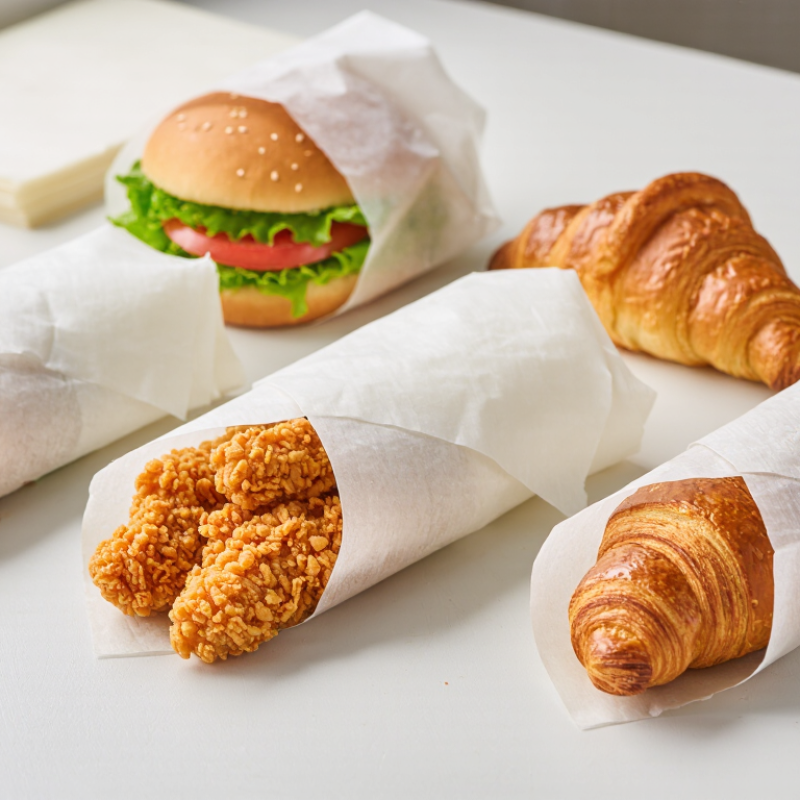
China’s foodservice sector is changing how meals are wrapped, carried, and presented. Wax Paper Food Wrapping remains practical because it offers grease resistance, easy folding, and a clean surface for direct food contact. It suits burgers, sandwiches, pastries, fried snacks, and bakery items. The detail matters. A poorly coated sheet can soften beside hot fries. A well-engineered sheet keeps oil from staining the customer’s hands.
Industry data supports this demand. Smithers’ packaging research identifies sustainability, food safety, and material efficiency as major forces shaping paper-based packaging through 2028. Grand View Research also reports continued growth in the global paper packaging market, driven by takeaway food, e-commerce, and consumer preference for fiber-based formats. These reports indicate opportunity, but market growth alone proves nothing. Manufacturer capability still depends on coating consistency, paper strength, printing control, and documented quality systems.
This is where a qualified Chinese manufacturer can create measurable value. Production should be supported by food-contact material testing, traceable raw materials, controlled coating weight, and stable converting accuracy. Packaging should also match the application. A lightweight sheet may work for a dry pastry, but not for oily fried chicken. Small choices matter.
Reliable supply needs evidence.
Buyers should review samples, technical specifications, factory audits, and batch records before placing large orders. Certifications can help, yet they should be verified against the destination market’s requirements. The strongest China supplier combines scalable manufacturing with responsive engineering and honest communication. Some claims still require closer testing. That is not weakness; it is responsible sourcing.
Wax Paper Food Wrap: Definition, Uses, and China’s Manufacturing Role
China Best Wax Paper Food Wrapping Manufacturer
Wax paper food wrap is paper coated with a thin layer of wax. The coating helps resist grease, moisture, and light food contact. It is commonly used for sandwiches, pastries, cookies, cheese, and takeaway snacks. The paper folds easily around irregular shapes. It also creates a clean, practical serving surface.
In daily production, manufacturers select paper by weight, texture, and strength. Coating temperature must remain stable during processing. Uneven wax can cause weak spots or unwanted transfer. Quality teams usually check coating coverage, folding performance, odor, and food-contact test results. They also review raw material records and production batches.
Small details matter. A wrapper that tears beside a warm pastry can damage the customer’s experience.
China plays an important role in this manufacturing field because it combines material sourcing, converting equipment, printing services, and export logistics. Experienced factories can adjust sheet sizes, roll widths, folding styles, and packaging quantities for different food businesses. Clear specifications help prevent costly misunderstandings.
However, low price should not be treated as proof of quality. No material is perfect. Some wax papers may perform poorly with very hot, oily, or wet foods. Buyers should request samples, review technical data, and confirm the intended application before placing large orders. Reliable cooperation depends on consistent testing, honest communication, and traceable production records.
Paper Grades and Wax Coatings: 30–60 g/m² Basis Weight Standards
China Best Wax Paper Food Wrapping Manufacturer
Paper Grades and Wax Coatings: 30–60 g/m² Basis Weight Standards
Choosing wax paper starts with paper grade, not appearance. Basis weight shows how much one square meter weighs. In food wrapping, 30–60 g/m² covers many practical needs.
A 30 g/m² sheet feels light and folds easily. It suits dry pastries, interleaving, and short service periods. The sheet can tear when handling oily or heavy food.
A 40–50 g/m² grade offers better balance. It supports sandwiches, bakery items, and takeaway portions without feeling bulky. A 60 g/m² grade gives stronger handling and improved opacity. It works well for greasy foods or longer display times. However, higher weight does not automatically mean better performance. Fiber strength, porosity, and moisture resistance still matter.
Wax Coating Performance
Wax coating changes the paper’s behavior. A thin, even coating improves release and slows oil penetration. Paraffin-based and vegetable-wax systems can produce different stiffness, odor, and heat responses. Coating weight should match the food, wrapping method, and storage temperature. Excess wax may create a slippery surface and complicate printing. Too little wax can leave visible grease marks.
Production checks should examine coating coverage, fold cracks, odor, and contact cleanliness. Small defects can escape routine sampling. Wider testing is sometimes necessary, because one sheet cannot represent an entire roll. That limitation deserves attention.
Manufacturing Process: Wax Application, 120–150°C Melting, and Quality Control
China Best Wax Paper Food Wrapping Manufacturer
Reliable wax paper begins with disciplined temperature control. In production, wax is commonly melted between 120–150°C before coating. Operators monitor tank temperature, viscosity, and pump pressure continuously. A stable melt spreads evenly across the paper surface. Too cold, and the coating becomes uneven. Too hot, and wax degradation or paper distortion may occur. This balance requires calibrated sensors and experienced line operators. Small deviations matter.
Coating weight is checked by sampling defined areas and measuring dry basis weight. Visual inspection then searches for pinholes, streaks, weak edges, and uncoated spots. Food-contact testing should assess migration, odor, and chemical safety under intended use conditions.
These controls support dependable wrapping performance around sandwiches, pastries, and chilled foods. The FAO reported that 13.2% of food was lost between harvest and retail globally in 2021. The UNEP Food Waste Index Report 2024 estimated 1.05 billion tonnes of food waste in 2022.
Packaging cannot solve waste alone, but consistent barrier quality can reduce avoidable exposure and handling damage. Our process still needs improvement. Temperature records without coating-weight records are incomplete evidence. Reliable manufacturers review both.
How to Evaluate China’s Best Manufacturer: GSM, Roll Width, MOQ, and Testing Data
China Best Wax Paper Food Wrapping Manufacturer
Evaluating a wax paper manufacturer starts with measurable specifications. GSM affects strength, stiffness, and material cost. For food wrapping, 35–60 GSM often suits lightweight sheets, while heavier grades support oily or warm foods. The correct choice depends on folding and holding time. FAO’s FAOSTAT Forestry Production and Trade database reported global paper and paperboard production above 400 million tonnes in 2022. This scale makes specification control essential, not optional. Ask for ISO 536 basis-weight results from recent production lots. Check whether the stated GSM matches the actual average.
Roll width needs equal attention. Confirm usable width, edge trim, winding direction, core diameter, and tolerance. A 300 mm roll with uneven edges can waste packaging film during automatic wrapping. MOQ should match your trial volume. Request separate quantities for sampling, pilot production, and regular orders. Numbers matter.
Tips: Ask for a complete testing file, not a single certificate. Useful evidence includes GSM, tensile strength, moisture, grease resistance, and food-contact migration results. TAPPI T 559 can support grease-resistance evaluation, while ISO 2859-1 helps structure sampling plans. In my factory audits, small sample rolls sometimes performed better than mass production rolls. That gap deserves questions. Request batch-coded reports, test dates, laboratory names, and retained samples. Also verify whether the declared roll width is measured before or after trimming. That detail is easy to miss.
China Best Wax Paper Food Wrapping Manufacturer: Evaluation Reference
Typical procurement reference ranges for GSM, roll width, MOQ, and food-contact testing evidence. Confirm final specifications with each manufacturer.
A practical screening range for waxed food-wrapping paper is approximately 35–70 GSM, with roll widths commonly customized between 300 and 1,000 mm. Commercial MOQs often fall around 500–2,000 kg, depending on coating, printing, packaging, and production scheduling. Ask for batch-specific GSM and width records, food-contact declarations, migration-test reports, and relevant test methods such as ISO 535 for water absorption and applicable FDA or EU food-contact requirements.







 Jimmy
 Eric