


 Jimmy
Jimmy Eric
Eric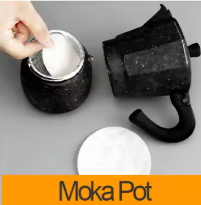


Coffee Filter Paper Material and Shape: Choosing the Right Filter Paper Makes Brewing Easier
Have you ever had this experience? Using the same coffee beans and the same pour-over kettle, the coffee you brew is sometimes sour and bitter, sometimes weak, and even has a strange papery taste?
Many times, the problem isn't your brewing technique, but the overlooked "little supporting actor"—the Coffee Filter paper. (OEM Coffee Filter Paper Manufacturer | Quality & Reliability by HOPE WELL) As the "first hurdle" in coffee extraction, the material and shape of the filter paper directly determine the water flow rate, the evenness of extraction, and ultimately affect the flavor profile of each cup of coffee. Today, we'll explain how to choose the right filter paper, so even beginners can avoid common pitfalls!
First, let's look at the material: Different materials result in vastly different flavors
Currently, there are three main types of coffee filter Paper materials on the market: virgin wood pulp, bleached pulp, and hemp. Each type has its advantages and disadvantages, and they are suitable for different types of coffee and different needs. Read on to find the one that suits you best!
1. Unbleached Pulp Filter Paper: A Cost-Effective Choice with a Natural Feel
This is the most common and basic filter paper material, made from unbleached virgin wood pulp (Custom American Coffee Pod and Bag Filter Paper Manufacturers), with a natural yellowish-brown color.
Its advantages are prominent: affordable price, high cost-performance ratio, suitable for daily high-volume coffee consumption; the paper has good toughness and is not easily damaged or leaks coffee grounds during brewing.
It should be noted that unbleached pulp filter paper has a slight woody taste, which may be noticeable to those sensitive to flavor. However, this problem is easily solved—fully wet the filter paper with hot water before brewing. This removes the papery taste and preheats the filter cup, killing two birds with one stone.
Suitable for: Beginners, those seeking high cost-performance, and coffee lovers who don't mind a slight natural woody taste.
2. Bleached Pulp Filter Paper: Pure Flavor, Beginner-Friendly
To avoid the papery taste of virgin wood pulp, manufacturers bleach the pulp, creating white bleached pulp filter paper. Depending on the bleaching process, bleaching is divided into chemical bleaching and oxygen bleaching (environmentally friendly bleaching). Oxygen bleaching is a healthier option (High-Quality 9.5 IN Basket Coffee Filters | HOPE WELL Manufacturing).
Core advantages: Almost no odor, maximizing the preservation of the coffee bean's original flavor, ensuring every sip is the true taste of coffee. The paper texture is also finer, resulting in a clearer and smoother coffee liquid.
The only minor drawback is the slightly higher price compared to wood pulp, but the difference is negligible and well within an acceptable range.
Suitable for: Beginners (to avoid the paper smell affecting their judgment of coffee flavor), coffee lovers seeking a pure flavor, and those sensitive to off-flavors.
3. Hemp Filter Paper: An Advanced Choice with Added "Layered Flavor"
Hemp filter paper is made from natural hemp fibers and is a relatively niche, advanced type of filter paper.
Its characteristics are distinct: a looser fiber structure allows for faster water flow than pulp filter paper, resulting in shorter extraction times and reduced bitterness in the coffee; it also imparts a subtle hemp aroma, creating a more layered flavor profile. Furthermore, hemp fiber filter paper is reusable (simply wash and dry after use), making it more environmentally friendly.
It's important to note that hemp fiber filter paper is more expensive, and it requires thorough washing before first use to remove surface impurities and odors, making the process slightly more complicated.
Suitable for: Advanced coffee enthusiasts, those seeking unique flavor profiles, and environmentally conscious coffee lovers.
Regarding Shape: Choosing the Right Shape for Your Tools
The shape of the filter paper isn't just for aesthetics; it's crucial for better compatibility with the dripper and ensuring even extraction. There are three common shapes: conical, fan-shaped, and round.
1. Conical Filter Paper: Mainstream for Pour-Over, Even Extraction
The conical filter paper (Custom Coffee Filter Paper for Coffee Makers - HOPE WELL Manufacturing) is shaped like a funnel, with common angles of 60 degrees (most common) and 90 degrees. It allows for full contact between coffee grounds and hot water, a stable water flow, and high extraction evenness, effectively enhancing the aroma of the coffee beans.
Suitable Tools: Conical drippers (such as Hario V60, Kalita Wave) are the mainstream choice for pour-over coffee. Common sizes are available for 1-2 people and 3-4 people; choose according to the number of people drinking.
Suitable for: Enthusiasts who enjoy pour-over coffee and seek rich aroma and even extraction.
2. Fan-shaped filter paper: Simple to use, ideal for beginners.
Fan-shaped filter paper (Custom Natural Coffee Filter Paper from HOPE WELL | Quality Manufacturers) is fan-shaped, unfolding into a semi-circle. It adheres closely to the inner wall of the filter cup, minimizing the "channeling effect" (hot water flowing through gaps in the coffee grounds, leading to uneven extraction).
Advantages: Simple to use, high tolerance for error; even beginners can easily brew satisfactory coffee; relatively affordable, suitable for everyday use.
Compatible tools: Fan-shaped filter cups (such as Melitta 1x2), common sizes are for 2 people and 4 people.
Suitable for: Beginners, those who prefer simple operation and quick daily brewing.
3. Round Filter Paper: Versatile and Compatible with Various Tools
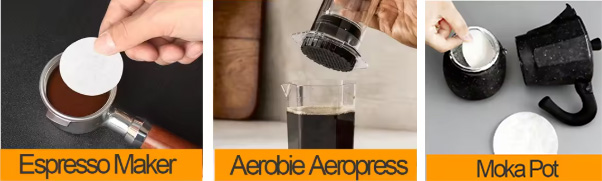
Round filter paper is the most traditional filter paper shape. It's thicker, provides excellent filtration, and effectively removes impurities from coffee, resulting in a purer brew.
Compatible Tools: Round drippers, drip coffee makers (such as American drip coffee makers), French presses (some French presses can be used with this tool). Highly versatile.
Suitable for: Users of drip coffee makers or round drippers who seek a pure taste and require versatility.
In conclusion: Choosing the right filter paper in 30 seconds
1. For beginners: Prioritize "oxygen-bleached pulp + fan-shaped filter paper"—simple to use, odorless, and easily avoids brewing pitfalls.
2. For those seeking value: Choose "wood pulp + cone/fan-shaped filter paper"—sufficient for daily drinking. Remember to moisten the filter paper before brewing to remove any papery taste.
3. For advanced users:Choose "linen + cone-shaped filter paper" for a unique flavor profile, or "bleached pulp + cone-shaped filter paper" for ultimate pure aroma.
4. Tool compatibility: First, check your filter cup/drip pot type, then select the corresponding cone, fan, or round filter paper. A size match ensures even extraction.
The core logic of choosing filter paper is simple: material determines flavor purity, and shape determines compatibility with tools and ease of use. Choosing according to your needs and tools will make brewing more efficient, allowing you to enjoy the best in every cup of coffee.
What kind of filter paper do you usually use? Have you ever encountered brewing problems due to choosing the wrong filter paper? Feel free to share your experiences and insights in the comments section!