China has become a significant sourcing base for Doilies Paper, supported by mature converting equipment, skilled labor, and export-focused supply chains. The Food and Agriculture Organization’s Global Forest Products Facts and Figures report recorded global paper and paperboard production above 400 million tonnes annually. This scale supports dependable material access. However, doilies require more than volume. Buyers inspect edge precision, embossing depth, whiteness, food-contact suitability, and packing cleanliness.
Smithers’ paper packaging research highlights continued demand for recyclable fiber formats and more transparent sustainability claims. That trend reaches restaurants, bakeries, hotels, caterers, and retail gift suppliers. A well-made paper doily should arrive flat, dry, and consistent. One weak corner can damage a premium table setting. Dr. Patrick S. O’Donnell, a packaging sustainability researcher, states, “Material performance must be judged across its full life cycle, not by appearance alone.” This principle matters when comparing recycled content, virgin fiber, inks, coatings, and transport efficiency.
China Top Paper Doilies Manufacturer for Global Buyers should therefore mean more than competitive pricing. It should indicate repeatable production, documented quality control, responsive sampling, and realistic delivery planning. Buyers should request test samples, production photographs, material specifications, and independent compliance records. Claims need evidence.
Perfection is not guaranteed. Even experienced factories can face seasonal pulp changes, color variation, or packaging damage. That deserves honest discussion. A reliable manufacturer identifies these risks early and corrects them with measurable procedures. For global buyers, trust is built through small details: clean stacking, accurate counts, sealed cartons, and consistent communication.
China Top Paper Doilies Manufacturer for Global Buyers
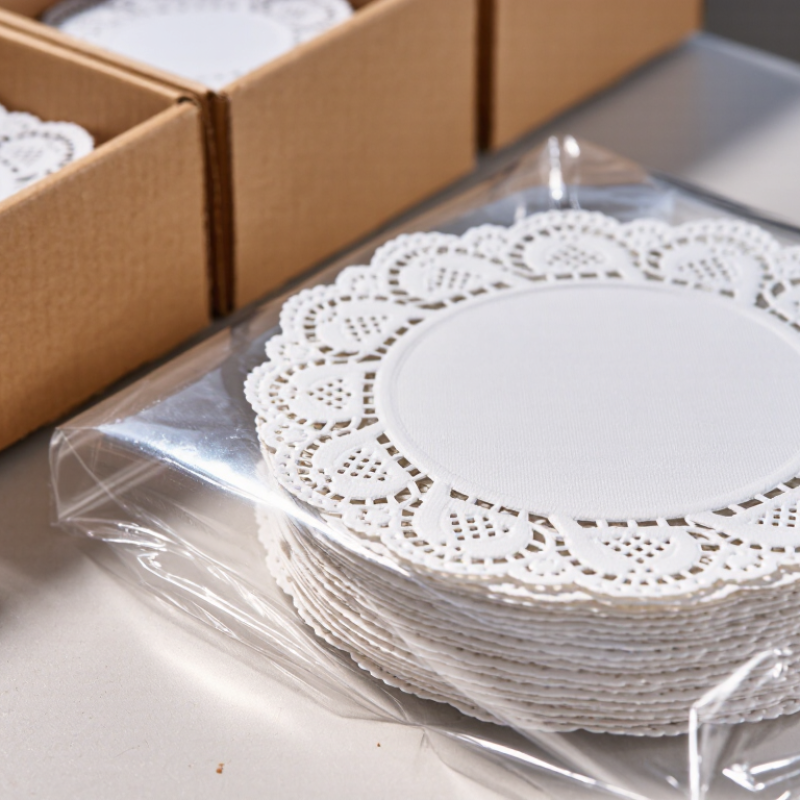
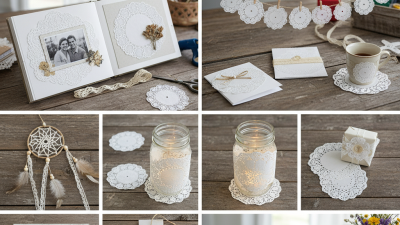
Paper doilies are decorative sheets made from lightweight paper. They usually feature lace-like edges, cutout patterns, or embossed details. These products protect surfaces and improve presentation without adding much weight. Cafés, bakeries, hotels, caterers, and household users commonly place them under cakes, pastries, cups, and tableware. Some buyers also use doilies for gift wrapping, craft projects, and seasonal displays. White remains popular, but kraft, pastel, and custom-printed options are gaining attention.
The market is practical rather than glamorous. Buyers often compare paper thickness, pattern clarity, size accuracy, packaging, and moisture resistance. Food-service users should request suitable material documentation and production inspection records. During manufacturing checks, uneven cutting and weak folds are common concerns. They can affect both appearance and handling. A dependable supplier should control raw materials, printing, die cutting, counting, and carton packing. Global buyers also need clear samples, realistic lead times, and stable communication. No single design fits every market.
Tips: Choose the doily size according to the plate or product base. Check whether the paper feels firm but still folds cleanly. Request pre-production samples before large orders. Review carton labels and inner packaging carefully. A low price can hide inconsistent cutting or excessive paper dust. Compare the complete supply process, not only the sample.
China Top Paper Doilies Manufacturer for Global Buyers
Materials and Manufacturing Process of Chinese Paper Doilies
Chinese paper doilies commonly use bleached virgin pulp, recycled pulp, or blended fiber. Virgin pulp gives cleaner color and sharper embossing. Recycled pulp reduces resource demand, but its surface may feel less uniform. Not every recycled sheet behaves perfectly. This trade-off deserves attention.
According to the Confederation of European Paper Industries’ 2023 preliminary statistics, European paper and board production reached about 79.5 million tonnes. The same industry data reported a production decline of roughly 13.8% from the previous year. These figures show why efficient material use matters. During sourcing, buyers should request basis weight, fiber composition, moisture range, and recycled content records. Lightweight tissue often improves cost control, but excessive thinness can cause tearing around intricate patterns.
A typical Chinese production line begins with pulp preparation and sheet forming. The paper is then dried, printed when required, embossed, and die-cut. Rotary cutting creates consistent lace patterns at higher volumes. Operators inspect edge cleanliness, hole alignment, color stability, and stacking accuracy. Practical factories also check samples from different production batches. Food-contact applications require suitable ink, paper, and migration testing under the buyer’s target-market rules. Paper recycling guidance from the European paper industry often emphasizes fiber quality and contamination control. That point is easy to overlook. A doily may look decorative, yet its performance depends on tiny fibers, controlled pressure, and careful humidity management.
| Data Dimension | Typical Material or Process | Common Technical Data | Application and Quality Considerations |
|---|---|---|---|
| Primary Paper Material | Food-contact-grade tissue paper, virgin cellulose paper, or recycled paper where permitted by local regulations | Common basis-weight range: approximately 17–40 g/m² | Lower basis weights provide a delicate appearance; higher basis weights generally improve stiffness and handling strength. |
| Fiber Composition | Cellulose fibers from bleached or unbleached paper pulp | Fiber selection affects softness, opacity, absorbency, and tear resistance | Virgin fiber paper is often selected for a cleaner appearance and more consistent converting performance. |
| Paper Color | Natural white, bright white, kraft brown, pastel shades, or custom dyed colors | Color consistency is normally checked against an approved production sample | Water-based or approved food-packaging inks are commonly used when printed decoration is required. |
| Standard Shapes | Round, square, rectangular, oval, heart-shaped, and custom die-cut profiles | Shape accuracy depends on die condition, paper alignment, and stack control | Round and square formats are widely used for plates, trays, cups, cakes, and dessert presentation. |
| Common Sizes | Small, medium, and large formats selected according to the serving item | Typical diameters or widths: approximately 10–40 cm | Exact dimensions should be specified with tolerance requirements before sampling and production. |
| Decorative Pattern | Lace-effect edge, embossed texture, printed motif, or plain border | Pattern detail is limited by paper thickness, die design, and cutting precision | Fine openwork patterns require clean cutting and sufficient paper strength to prevent tearing. |
| Printing Method | Flexographic or offset printing using suitable packaging inks | Usually applied before die cutting; one or more colors may be used | Printed surfaces should be evaluated for ink adhesion, rub resistance, odor, and food-contact suitability. |
| Prepress Preparation | Digital artwork review, color separation, proofing, and die-line confirmation | Artwork normally requires vector files or high-resolution print-ready files | Bleed, trim lines, repeat patterns, and safe margins should be confirmed before plate or die production. |
| Paper Conditioning | Controlled storage and conditioning before printing and die cutting | Paper performance is affected by humidity, temperature, and storage time | Stable conditions help reduce curling, cracking, dimensional variation, and feeding problems. |
| Printing and Drying | Paper feeding, ink application, registration control, and drying or curing | Registration, color density, smearing, and surface cleanliness are inspected | Drying must be sufficient before stacking or die cutting to avoid blocking and transfer marks. |
| Die Cutting and Embossing | Rotary or flatbed die cutting, with optional embossing or creasing | Cutting quality is evaluated by edge cleanliness, pattern definition, and dimensional accuracy | Sharp, properly aligned tooling helps minimize burrs, incomplete cuts, and torn decorative details. |
| Deburring and Sorting | Removal of paper waste followed by visual inspection and stack separation | Checks commonly include shape, print, edge quality, stains, and missing sections | Sorting improves pack uniformity and removes visibly defective pieces before final packing. |
| Food-Contact Consideration | Paper, ink, adhesive, and packaging components selected according to the destination market | Compliance requirements vary by country and intended food-contact use | Buyers should request applicable declarations, test reports, and regulatory documentation for the target market. |
| Moisture Resistance | Untreated paper or paper with a suitable coating when the application requires additional resistance | Standard paper doilies are generally intended for dry or low-moisture food presentation | High moisture, oil, or heat exposure can reduce strength unless the product is specifically designed for those conditions. |
| Packaging Format | Flat stacks, retail bags, bulk cartons, or individually packed units | Pack quantity is determined by size, thickness, sales channel, and shipping requirements | Packaging should protect the doilies from dust, compression, moisture, and deformation during transport. |
| Quality Inspection | Incoming material inspection, in-process checks, and final random sampling | Typical checks include dimensions, basis weight, color, print registration, cutting, and count | Inspection criteria and acceptable defect limits should be agreed in the purchase specification. |
| Storage Conditions | Clean, dry, ventilated storage away from direct sunlight and strong odors | Products should remain protected from excessive humidity, heat, pressure, and contamination | Proper storage helps preserve flatness, color stability, cleanliness, and edge quality before use. |
Paper doilies come in more than one decorative layer. Common types include lace-edge sheets, embossed doilies, food-contact rounds, and printed presentation liners. Popular sizes range from 4 to 18 inches, while rectangular and oval formats suit trays and dessert boxes. Round shapes remain practical, but heart, flower, scalloped, and custom silhouettes create stronger visual distinction. According to a 2024 Smithers market assessment, global paper-based packaging demand is expected to grow by roughly 3% annually through 2028. That growth supports wider use of lightweight decorative paper in catering and retail presentation.
Custom design requires careful coordination. Buyers can select white, kraft, pastel, or metallic-look paper, plus embossing, cut-out patterns, and single-color printing. Food-contact applications need suitable paper grades, ink control, and documented quality checks. In my production experience, a beautiful pattern can fail when its cut lines are too fine. Fit matters more than appearance alone. It is an easy mistake.
Tips: Confirm the finished diameter after cutting, not only the artwork size. Request a physical sample before mass production. Check thickness, edge smoothness, packaging count, and moisture resistance. The European Paper Packaging Alliance reports that recyclability depends strongly on material composition and coatings, so simpler paper structures are often easier to handle. Buyers should also test the doily with real cakes, cups, or trays. Photos can mislead. Physical testing is better.
China Top Paper Doilies Manufacturer for Global Buyers
Quality Standards, Food Safety, and Sustainability Practices
Reliable paper doilies begin with controlled materials and repeatable production. We select food-contact paper with documented fiber sources and consistent thickness. Incoming rolls receive checks for weight, moisture, brightness, and surface cleanliness. These details affect folding, printing, and table presentation.
Food safety requires more than attractive packaging. Production areas follow hygiene procedures and controlled storage practices. Printing uses suitable, low-migration inks where decoration is required. Finished batches are inspected for odor, loose fibers, color transfer, and cutting accuracy. Traceable lot codes connect each carton with its production records. Independent laboratory testing can also verify applicable food-contact and migration requirements for destination markets.
Sustainability needs practical decisions. We reduce trim waste through nesting layouts and collect usable paper scraps for approved recycling channels. Packaging can use recycled content when performance and food-contact requirements allow it. However, recycled materials are not automatically the best choice for every application. They may require stricter controls and clearer documentation. That limitation deserves honesty.
No production process is flawless. Humidity changes can affect paper curling, even after careful storage. We review complaints, retain samples, and adjust settings when patterns appear. Buyers should request specifications, test reports, and packaging details before approval. Clear evidence builds stronger partnerships than broad promises.
Global buyers usually begin with product evidence, not attractive catalog photos. Request samples in the exact size, paper weight, color, and edge pattern required. Check the cut lines under bright light. Uneven lace points can affect presentation. Ask for a written material specification and production tolerance. A capable manufacturer should explain its paper source, printing process, packing method, and quality checks clearly.
Import decisions also depend on factory experience. Review export records, production capacity, and relevant test reports where required by the destination market. Food-contact use needs extra care. Buyers should verify applicable local rules independently. A factory video is useful, but it is not a full audit. When possible, arrange a third-party inspection before shipment. Confirm carton dimensions, pallet details, minimum order quantity, lead time, payment terms, and the agreed delivery term in writing.
Small details often prevent expensive delays. Request a pre-production sample before approving bulk manufacturing. Then compare finished cartons against that approved sample. Include a moisture-resistant inner bag if sea transport crosses humid routes. Perform a simple carton drop test. It may reveal weak corners. I have seen early samples look excellent while later batches showed lighter paper or inconsistent embossing. One inspection is not enough. Production changes can happen quietly. Buyers should keep written records, ask difficult questions, and leave room for correction rather than trusting a perfect first impression.