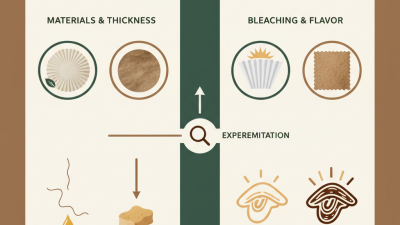
Coffee Filter Paper may look like a small part of a coffee setup, but it influences flow, clarity, and the amount of fine sediment in the cup. A paper’s thickness, porosity, and fit can affect how water moves through the grounds. The difference is easy to notice: one brew may taste clean and bright, while another feels heavier or slightly muddy. Results also depend on grind size, pouring technique, and roast, so paper alone cannot guarantee a better cup.
Coffee scientist Christopher H. Hendon has studied how brewing variables shape extraction. A cautious paraphrase of his research is: “Small changes in brewing conditions can change what ends up in the cup.” This is a summary, not a verified verbatim quotation. It points to a useful principle for evaluating manufacturers: look beyond product claims and compare specifications, quality controls, and performance under repeatable brewing conditions.
This guide introduces ten Coffee Filter Paper manufacturers serving different market needs, from household brewing to commercial supply. It considers material consistency, paper weight, available shapes, customization, production capacity, and quality documentation. Buyers should confirm food-contact suitability and request current technical data directly from suppliers. Names on a list are not endorsements. Samples matter. Test each paper with the same brewer, coffee dose, grind, and water temperature, then record flow time and taste. A clear comparison can reveal practical differences that a polished product sheet may not show.

China Top 10 Coffee Filter Paper Manufacturers
China’s coffee filter paper sector draws on a broad pulp-and-paper manufacturing base. The China Paper Association reported that China produced 127.05 million tonnes of paper and paperboard in 2023. This figure describes the wider industry, not filter paper alone, but it helps explain the availability of papermaking capacity, converting equipment, and technical suppliers. Filter paper requires more than thin sheets. Manufacturers must control fiber composition, porosity, wet strength, and sheet uniformity so water flows steadily without carrying fibers into the cup.
Production typically combines pulp preparation, wet-laying, drying, and precision cutting or forming. Small variations matter. A paper that drains too slowly can flatten a coffee’s flavor; one that drains too quickly may allow fine particles through. Buyers therefore compare basis weight, thickness, extractables, odor, and performance with hot water, rather than relying on appearance alone. Food-contact documentation and batch traceability also deserve attention.
The weak point in many discussions is limited public data: national paper statistics rarely isolate coffee filter grades, making supplier-level verification important. Manufacturers may supply cone, basket, or flat-bottom formats, with unbleached and bleached options. Custom sizing and packaging can serve export or domestic roaster needs, but consistency across production runs remains the harder test.
Ask for technical specifications and representative samples. Then test them under real brewing conditions. Small details show up fast.
China Paper Association, Annual Report 2023, provides the broader production context; it should not be treated as a direct measure of filter-paper output.
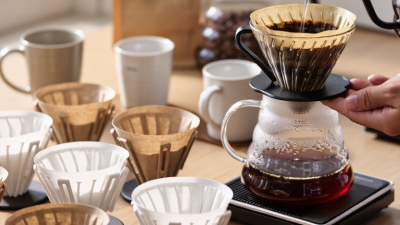
China Top 10 Coffee Filter Paper Manufacturers
Coffee filter paper looks simple, but its performance depends on controlled cellulose fibers. The International Coffee Organization reported global coffee consumption near 177 million 60-kilogram bags in 2023/24. This volume increases demand for stable brewing materials. Manufacturers usually select food-contact cellulose from renewable wood pulp. Some combine long and short fibers for strength and smooth flow.
Production begins with pulp preparation and precise refining. The fibers are mixed with water, then formed into a thin web on a paper machine. Heat removes moisture. Pressure improves thickness consistency. Many factories use oxygen-based bleaching instead of chlorine-based methods. This reduces unwanted residues and supports cleaner food-contact production.
Filter paper needs enough wet strength to hold boiling water and coffee grounds. It must also release liquid at a predictable rate. Internal testing often checks basis weight, porosity, tensile strength, and extractable substances. The Technical Association of the Pulp and Paper Industry provides widely used testing methods for these properties. The Food and Agriculture Organization also identifies wood fiber as a major renewable industrial material.
The difficult part is balance. A tighter sheet can produce cleaner coffee, but it may slow filtration. A porous sheet drains faster, yet weak fibers may tear. No production line makes every sheet identical. Small differences in refining, drying, or folding still matter. This is where supplier audits and batch testing become essential, not optional.
A typical cellulose-paper workflow, from pulp preparation to finished filters. The bars show process order only—not processing time, capacity, or manufacturer-specific data.
For China Top 10 Coffee Filter Paper Manufacturers, buyers should evaluate measurable performance, not catalogue claims. The International Coffee Organization estimated global coffee consumption at 177.0 million 60-kilogram bags in coffee year 2023/24. That scale makes stable filter supply important, but it does not prove any supplier’s quality. Ask for recent test records covering basis weight, thickness, wet strength, and water flow. ISO 536 provides a method for measuring paper grammage, while ISO 535 addresses water absorptiveness. These tests help compare samples on a consistent basis.
Request production-lot results, not only a single sample report. Inspect the paper against a bright light: uneven fibres, pinholes, or rough edges can signal process variation. Then brew identical coffee doses with the same grind and water temperature. Record drawdown time and check for paper taste or visible fibre shedding. Small differences matter. Still, one brew test is not enough; grind size and pouring technique can distort results. A careful supplier should explain its sampling method, test frequency, and corrective process when a batch misses specification.
Also assess traceability, capacity, and communication. Ask whether the manufacturer can link a shipment to its production date and raw-material records. Confirm that quoted capacity reflects routine output, rather than peak production. Request sample rolls or sheets from more than one lot before approval. A polished report can hide gaps. Buyers should verify the data independently where possible, and document any unresolved limits before placing repeat orders.
China Top 10 Coffee Filter Paper Manufacturers
Profiles of Ten Leading Coffee Filter Paper Manufacturers
China’s leading coffee filter paper manufacturers differ in materials, equipment, and quality controls. One profile focuses on lightweight paper for pour-over cones, using controlled creping to improve flow. Another specializes in heavier sheets for commercial brewers, where wet strength matters during long extraction. A third combines imported cellulose with local converting lines, balancing fiber consistency and production cost.
Several manufacturers operate near major paper-making regions, shortening delivery times for overseas buyers. One factory emphasizes oxygen bleaching and low-odor processing. Another maintains separate clean areas for slitting, folding, and packaging. A technically mature supplier checks basis weight, thickness, porosity, tensile strength, and water absorption before shipment. These tests provide useful evidence, but they cannot predict every brewing result.
The strongest profiles also show practical traceability. Buyers can review pulp sources, batch records, laboratory reports, and export documentation. Some factories offer custom sizes, embossed surfaces, or different edge seals for private-label products. Small details matter, such as a clean fold line and stable filter shape. A production manager may inspect samples from every shift, not only one daily batch. That experience is valuable.
Still, no manufacturer performs perfectly in every category. A fast supplier may offer fewer customization options. A low-cost sheet may produce uneven flow. I would compare several batches, test them with the same coffee, and inspect the paper after brewing. Supplier claims deserve verification.
| Profile | Manufacturer Focus | Common Filter Paper Format | Material and Construction | Key Product Considerations | Typical Applications |
|---|---|---|---|---|---|
| 01 | Unbleached cone-filter paper production | Pre-cut cone-shaped sheets | Cellulose-based paper; brown appearance is commonly associated with unbleached grades | Fit to dripper size, wet strength, and consistent flow rate | Pour-over brewing in cone drippers |
| 02 | Bleached cone-filter paper production | Pre-cut cone-shaped sheets | Cellulose-based paper processed to produce a white appearance | Paper taste, particle retention, and fit to the brewing device | Pour-over brewing in cone drippers |
| 03 | Flat-bottom filter paper converting | Basket-style, flat-bottom sheets | Porous cellulose paper cut and formed for basket brewers | Basket dimensions, seam quality, and resistance to tearing when wet | Batch brewers and flat-bottom coffee drippers |
| 04 | Household coffee-filter production | Standard consumer-size cone or basket filters | Food-contact paper selected for brewing and filtration use | Consistent sizing, clean-cut edges, and suitable packaging | Home coffee makers and manual brewers |
| 05 | Commercial-brewer filter production | Larger basket or disc-style formats | Filter paper converted to match commercial brewer dimensions | Capacity, wet strength, and compatibility with the specified brewer | Restaurants, offices, and food-service operations |
| 06 | Custom-size filter converting | Made-to-order sheets, cones, or discs | Paper grades selected according to the required shape and filtration performance | Dimensional tolerances, repeatability, and sample approval | Private-label products and equipment-specific filters |
| 07 | Paper-roll supply for downstream converters | Parent rolls or slit rolls | Continuous porous paper supplied for further cutting or forming | Roll width, winding quality, basis weight, and uniformity | Filter converting and packaging operations |
| 08 | Disposable pour-over filter production | Single-use filter bags or integrated paper filters | Formed filter paper designed to hold coffee grounds during brewing | Seal integrity, brew-through performance, and packaging protection | Portable and single-serving coffee brewing |
| 09 | Specialty filtration-paper production | Custom sheets or rolls in specified grades | Cellulose filter media designed around application-specific porosity and strength | Filtration consistency, extractables requirements, and documented specifications | Specialty coffee applications and custom filtration products |
| 10 | Export-oriented filter-paper converting | Retail packs, bulk packs, or converter rolls | Paper products prepared to customer-defined formats and packaging requirements | Product specification control, packaging details, and destination-market requirements | International wholesale and private-label supply |
Coffee filter paper sourcing is shifting from price-only buying toward consistency, traceability, and material efficiency. Buyers increasingly ask about fiber origin, bleaching method, basis weight, and food-contact documentation. Small changes matter. A sheet that feels sturdy in a sample may drain too slowly in a commercial brewer. Demand for compostable packaging also shapes product development, though claims should be checked against test conditions and local disposal systems.
When comparing manufacturers, request samples from multiple production lots, not just one polished set. Test wet strength, seam integrity, taste neutrality, and flow rate using the same grind and water temperature. Keep notes. A simple timed brew can reveal variation that a specification sheet misses. Ask suppliers how they control pulp batches, thickness, and storage humidity. Delivery lead time, minimum order quantity, and packaging format can affect landed cost more than a small unit-price difference.
Regional sourcing may shorten transit, but capacity and quality systems still deserve scrutiny. Review certificates and audit records directly, and confirm whether testing applies to the exact paper grade being purchased. Some buyers overvalue the lowest quoted price; that can be a costly shortcut. Forecasts are imperfect, and switching suppliers too quickly may expose differences in aroma or extraction. Build a trial period into procurement, then review complaints and brew results together. There is no perfect specification.