
Leave Your Message
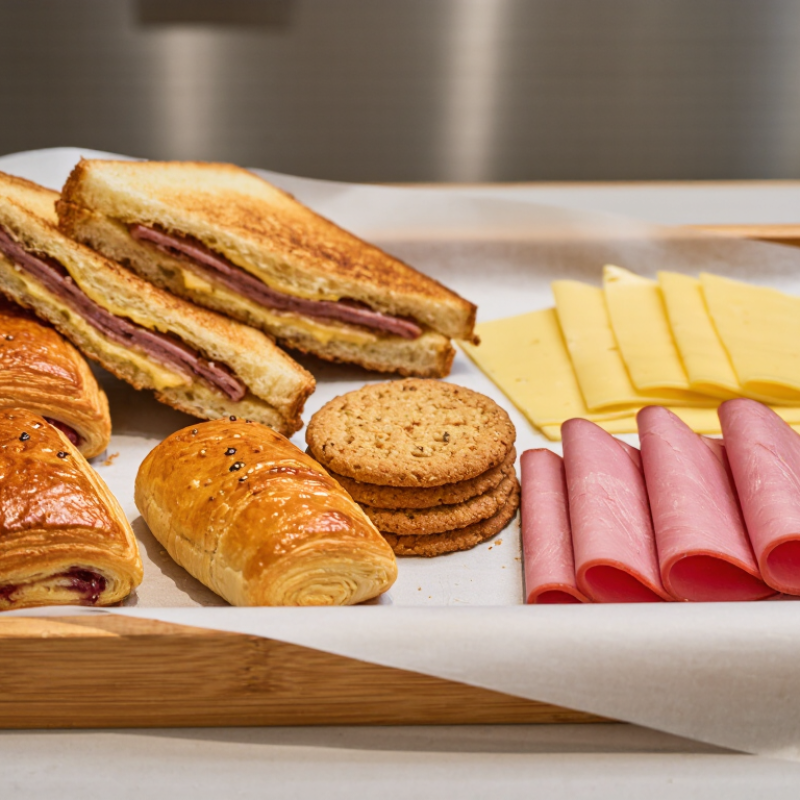
When a sandwich arrives in a crisp paper wrap, the packaging often does more than hold the meal together. A Deli Wax Paper Sheet helps separate food from counters, baskets, trays, and serving boards. Its waxed surface resists light grease and moisture, making it practical for sandwiches, burgers, pastries, cookies, cheese, and sliced deli meats. In a busy café, staff can place one sheet beneath a toasted panini before serving. This reduces direct contact with the tray and makes cleanup faster. The paper can also support portion control, especially when workers prepare several meals during a lunch rush.
It is a simple material.
Many food businesses use these sheets for lining baskets or wrapping individual items. Some printed designs also improve presentation, giving a plain takeaway order a more recognizable appearance. However, the exact performance depends on the paper’s coating, size, and manufacturer instructions. It should not automatically be treated as parchment paper or assumed to be safe for oven use. That assumption can fail. A careful operator checks whether the sheet is approved for direct food contact and whether it suits hot, oily, or wet foods. In my experience, wax paper works best when the food is warm rather than extremely hot. It may soften around heavy sauces or prolonged moisture. For that reason, choosing the correct sheet requires more than judging its appearance. Clean handling, suitable storage, and realistic expectations make this everyday packaging more reliable.
What Is Deli Wax Paper?
Deli wax paper is food-grade paper coated with a thin layer of wax. This coating helps resist grease and light moisture. It is commonly sold as flat sheets or rolls. The sheets make food handling faster and cleaner in busy kitchens.
A deli wax paper sheet can wrap sandwiches, burgers, pastries, cheese, and sliced meats. It also separates cookies or cheese slices inside a container. The paper keeps oily food from sticking to serving trays. It can make a simple lunch look more organized. It feels simple. Not quite.
The wax layer is useful, but it has limits. Deli wax paper is not a replacement for parchment paper. It should not touch oven heat, a grill, or a hot pan. For cold foods, use sheets labeled for food contact and follow the supplier’s instructions. In practical use, a slightly oversized sheet wraps better than a tight one. Folding too sharply can split the paper near greasy corners. I have found that thick sauces may eventually soak through, especially when food sits for hours. That detail is easy to overlook.
For takeout preparation, workers often place the sheet beneath food before folding the corners inward. This reduces mess and gives customers a cleaner opening experience. However, wax paper is not always airtight, so it may not prevent drying or odors during extended storage. Check local food-packaging requirements when using it in a commercial setting.
| Data Dimension | Factual Information | Practical Use or Consideration |
|---|---|---|
| Definition | Deli wax paper is paper coated with a thin layer of wax on one or both sides. | The coating helps reduce direct contact between food and the paper while adding resistance to light moisture and grease. |
| Primary Food Uses | Commonly used for sandwiches, burgers, wraps, pastries, cookies, sliced cheese, and cold deli foods. | It can wrap individual portions or provide a clean barrier between food and a serving surface. |
| Basket and Tray Liner | Sheets can be placed beneath sandwiches, fried foods, baked goods, or snacks. | The liner helps catch small amounts of crumbs, oil, or food residue and improves presentation. |
| Food Separation | Wax paper sheets can be used as separators between slices, patties, cookies, or other items that may stick together. | Separation is especially useful during short-term refrigeration or preparation. |
| Moisture Resistance | The wax coating provides limited resistance to moisture but does not make the paper waterproof. | It works best with foods that are moist or greasy rather than foods releasing large amounts of liquid. |
| Grease Resistance | Wax-coated paper slows the passage of oil and grease compared with ordinary uncoated paper. | It is suitable for short-term handling of items such as pastries, fried foods, and sandwiches. |
| Cold Storage | Wax paper may be used for short-term wrapping or separating of refrigerated foods. | It should not automatically be treated as an airtight or long-term food-storage material. |
| Freezer Use | Some wax paper products can be used in freezer applications, but performance depends on the product construction and packaging instructions. | For extended freezing, use a material specifically labeled for freezer storage and add an airtight outer layer when needed. |
| Heat Tolerance | Wax paper is not designed for direct exposure to high heat, open flames, broilers, or conventional ovens unless the product label specifically permits it. | Use parchment paper for oven baking because parchment is manufactured for higher-temperature applications. |
| Microwave Use | Microwave suitability varies by product and should be confirmed on the package instructions. | Do not use wax paper in a microwave if the product labeling does not clearly allow it. |
| Food Contact | Sheets intended for food service are made for direct contact with food under the conditions specified by the manufacturer. | Use only food-contact paper for wrapping or serving food; avoid craft or industrial waxed papers. |
| Appearance and Handling | Deli sheets are usually lightweight, flexible, and available in pre-cut rectangular formats. | Pre-cut sheets support faster portioning, wrapping, and service than cutting paper from a roll. |
| Main Advantages | They are lightweight, convenient, disposable, and provide a basic grease- and moisture-resistant barrier. | They are useful for quick food preparation, takeaway service, portion control, and cleaner handling. |
| Main Limitations | Wax paper is not a substitute for parchment paper, plastic film, foil, or an airtight storage container in every application. | Select the wrapping material according to temperature, storage time, moisture level, and the product label. |
| Disposal Consideration | Wax-coated paper is generally more difficult to recycle than clean, uncoated paper because the coating can interfere with paper fiber processing. | Follow local waste rules and keep used food-service paper out of recycling where local guidance excludes coated or food-soiled paper. |


 Jimmy
Jimmy Eric
Eric