
Leave Your Message
Wax Paper Food Wrapping remains a practical choice for bakeries, delis, cafés, and food manufacturers serving diverse markets. Its smooth surface helps separate pastries, sandwiches, cheese portions, and fried snacks. It can also reduce grease transfer during short-term handling. However, wax paper is not a universal barrier.
Dr. Susan Selke, a respected packaging materials expert, states, “Good packaging protects the product and serves the user.” This principle guides the selection of the top ten wax paper food wrapping types. Buyers should examine wax coverage, paper weight, folding performance, printing quality, and resistance to moisture or oil. A thin sheet may suit cookies, while a stronger grade supports heavier sandwiches. Small details matter. A weak fold can leak. A dull print can weaken brand trust. The wrong wax coating may soften near warm food.
Global buyers also need practical evidence. Request samples. Test the paper with actual food. Check storage conditions, roll dimensions, cutting accuracy, and packaging consistency. Supplier declarations should support food-contact suitability and responsible sourcing claims. Certifications may differ between markets, so buyers should verify current requirements with qualified local advisers.
Some options look sustainable but lack clear documentation. That deserves scrutiny. “Natural” does not automatically mean compostable. Recyclability can also depend on coatings and local facilities. This guide compares ten common formats, including sheets, rolls, interfolded papers, printed wraps, and custom-cut designs. It focuses on real handling conditions, not attractive catalog language. There is no perfect option. The best choice balances protection, presentation, cost, and verified performance.
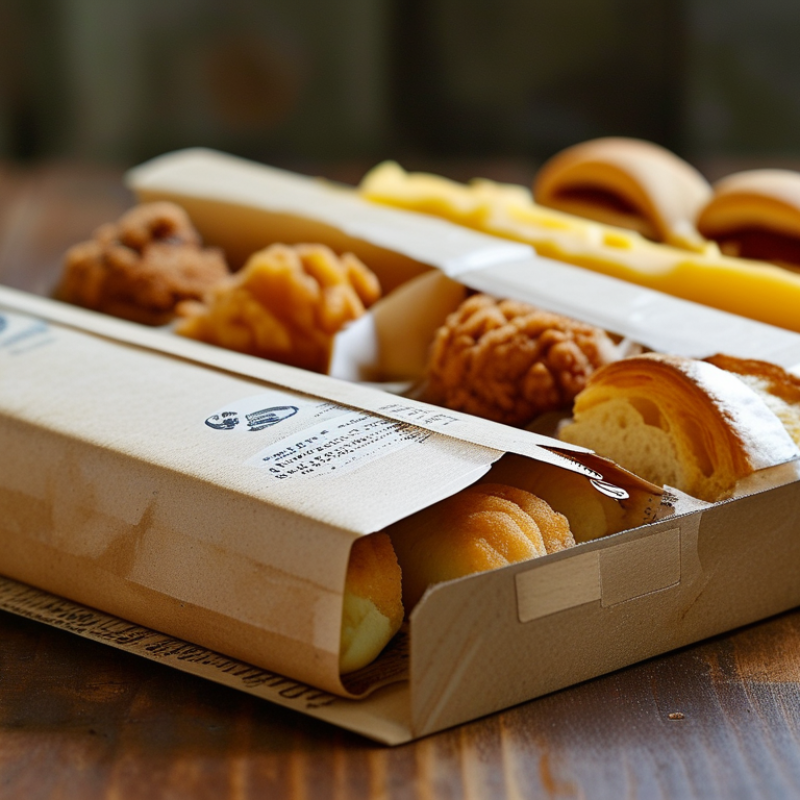
Top 10 Types of Wax Paper Food Wrapping for Global Buyers
Wax Paper Food Wrapping: Definition, Materials, and Key Functions
Wax paper is food-grade paper coated with a thin moisture-resistant layer. The coating commonly uses paraffin or plant-based wax. Some products use blended coatings for stronger grease resistance. The paper remains foldable, printable, and easy to cut. It is different from parchment paper. Wax paper may soften under high heat.
In packing trials, I check coating coverage, odor, seal behavior, and tear strength. A sandwich should open cleanly, without oily marks spreading through the sheet. A bakery liner needs a smoother release surface. A butcher-style wrap needs more body and controlled flexibility. These details affect handling speed, product appearance, and waste levels. Small differences matter.
Wax paper mainly separates food from dirt, reduces grease transfer, and helps retain surface moisture. It can wrap snacks, confectionery, baked goods, and chilled portions. It is not a perfect barrier. Wet foods may weaken it over time. Direct oven use is unsuitable unless the supplier clearly approves it. Buyers should verify basis weight, coating type, roll or sheet dimensions, food-contact documentation, and storage conditions. Requirements differ across markets, so one certificate may not satisfy every destination. Attractive samples can still fail during humid storage. Testing the actual food remains essential.
A practical comparison of wax-coated food-contact papers by construction, performance, applications, and purchasing considerations.
| Rank | Wax Paper Type | Typical Paper and Coating Structure | Primary Barrier Performance | Common Food Applications | Key Functions | Important Purchasing Considerations |
|---|---|---|---|---|---|---|
| 1 | Paraffin-Coated Wax Paper | Bleached or unbleached paper coated with food-contact-grade paraffin wax on one or both sides. | Good resistance to grease and moderate moisture; limited resistance to high heat and liquid leakage. | Sandwiches, bakery products, confectionery, snacks, and household food storage. | Separates food portions, reduces surface drying, prevents light grease transfer, and provides a clean wrapping layer. | Confirm food-contact compliance, coating weight, basis weight, sheet dimensions, and whether the paper is single- or double-sided coated. |
| 2 | Vegetable-Wax-Coated Paper | Paper coated with a plant-derived wax or plant-based wax blend; the exact formulation varies by supplier and market. | Generally provides grease resistance and moisture protection similar to conventional waxed paper, depending on coating formulation. | Bakery items, dry snacks, take-away foods, produce portions, and food presentation. | Offers a waxed barrier while supporting buyers seeking renewable or plant-derived coating inputs. | Request documentation for the exact wax source, additives, migration limits, storage conditions, and end-of-life claims; “plant-based” does not automatically mean compostable. |
| 3 | Beeswax-Coated Paper | Paper coated with beeswax, sometimes blended with other food-contact-compatible waxes or natural resins. | Repels water and light surface grease; can provide a flexible moisture barrier when properly coated. | Reusable-style food covers, sandwiches, cheese, fruit, vegetables, and cold food portions. | Wraps and covers food while offering a natural wax appearance and pliability. | Not suitable for vegans, people with bee-product restrictions, or high-temperature use; verify hygiene instructions, coating composition, and whether the product is intended for reuse. |
| 4 | Dry Wax Paper | Paper with a relatively dry, low-tack wax surface, commonly produced by applying wax and setting it into the paper surface. | Good release and grease resistance; normally offers less liquid containment than plastic-coated or laminated papers. | Bakery interleaving, burger wrapping, meat and cheese separation, candy, and food-service liners. | Prevents food from sticking, supports stacking, and separates oily or delicate products. | Evaluate release performance, surface smoothness, caliper, tear strength, and whether the wax transfers onto moist or warm foods. |
| 5 | Wet Wax Paper | Paper treated with wax while the coating remains more integrated with the sheet, creating a smoother and more moisture-resistant surface. | Typically stronger moisture and grease resistance than dry wax paper, although it is not a substitute for a leak-proof barrier film. | Meat, poultry, seafood, deli foods, produce, frozen foods, and high-moisture food-service portions. | Helps limit liquid penetration, protects the paper from oil, and improves handling of damp products. | Check wet-strength performance, cold-temperature flexibility, coating uniformity, and suitability for direct contact with acidic or salty foods. |
| 6 | Freezer Wax Paper | Low-temperature-flexible paper with a wax coating designed for food wrapping and separation during frozen storage. | Provides surface moisture and grease resistance and helps reduce freezer burn, but does not create an airtight package by itself. | Meat, fish, poultry, baked goods, butter portions, and food items stored in domestic or commercial freezers. | Separates portions, reduces surface exposure, and helps protect food during frozen storage and handling. | Confirm the recommended temperature range, fold durability, seal or closure method, and compatibility with secondary freezer bags or containers. |
| 7 | Deli and Butcher Wax Paper | Usually heavier paper with a wax coating on one or both sides; may be supplied as sheets, rolls, or interleaving papers. | Good grease resistance and moderate moisture resistance for short-term chilled food handling. | Cold cuts, cheese, cooked meats, sandwiches, burgers, fried foods, and prepared deli portions. | Provides hygienic wrapping, portion separation, easy folding, and temporary protection during transport or display. | Specify food type, sheet strength, roll width, coating side, cutting format, and resistance to cold condensation and oily foods. |
| 8 | Bakery and Confectionery Wax Paper | Lightweight to medium-weight paper with a smooth waxed surface optimized for release and presentation. | Good resistance to surface grease and sticking; limited protection against free liquid and prolonged high humidity. | Cookies, pastries, cakes, chocolate, candies, dough portions, and baked snack items. | Prevents sticking, preserves product appearance, supports interleaving, and reduces grease marks on packaging. | Assess release quality, odor neutrality, printability, surface gloss, and suitability for contact with chocolate, oils, and sugar-based products. |
| 9 | Printed and Decorative Wax Paper | Waxed paper printed with food-safe inks, patterns, or functional graphics on an appropriate printable surface. | Barrier performance depends mainly on the paper and wax structure; printing should not compromise food-contact safety. | Food-service wraps, bakery presentation, snack portions, gift confectionery, and event catering. | Combines wrapping, grease protection, visual presentation, portion identification, and handling convenience. | Use inks and coatings approved for the intended food-contact arrangement; verify rub resistance, ink migration controls, color stability, and print coverage limits. |
| 10 | Waxed Paper Sheets and Interleavers | Pre-cut waxed paper sheets or narrow interleaving strips supplied for repeated separation of individual food pieces. | Provides surface grease resistance and product release; barrier level varies with paper weight and coating amount. | Cheese slices, burger patties, frozen foods, bakery pieces, chocolate, meat portions, and stacked snacks. | Improves portion separation, reduces product adhesion, speeds packing, and supports clean automated or manual handling. | Match sheet size, tolerance, dispensing format, basis weight, cut accuracy, and coating side to the packing equipment and product dimensions. |
General buyer note: Wax paper is normally intended for wrapping, interleaving, and separating food rather than direct oven use. Waxed paper is not generally accepted in standard paper recycling streams because the wax coating and food contamination can interfere with pulping. Always verify local food-contact regulations, temperature limits, migration documentation, and disposal guidance before purchase.



 Jimmy
Jimmy Eric
Eric