
Leave Your Message
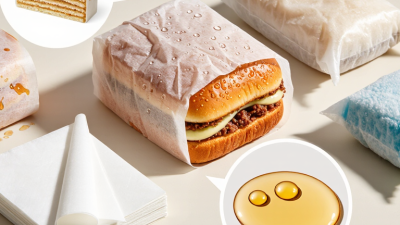
Wax Paper Food Wrapping remains a practical option for bakeries, delis, cafés, and household kitchens. It places a thin wax coating between food and the surrounding air. This helps handle sandwiches, pastries, cheese, candies, and other low-moisture foods. The paper also separates greasy surfaces from fingers, trays, and display cases. Simple, but useful.
Grand View Research reported that the global food packaging market reached approximately USD 562.3 billion in 2023. Its analysis also identifies convenience, portion control, and sustainable material choices as important market drivers. Smithers’ packaging studies similarly show continuing demand for fiber-based formats. However, public reports rarely isolate wax paper as a separate category. That limitation matters. It prevents overly confident claims about its exact global market size.
Packaging specialist Walter Soroka defines packaging as “the science, art, and technology of enclosing and protecting products.” His statement explains why Wax Paper Food Wrapping involves more than appearance. Material weight, coating quality, food temperature, folding technique, and storage time all influence performance. A warm, oily pastry can soften the sheet quickly. A chilled sandwich may remain cleaner and easier to carry.
The practical lesson is not universal. Wax paper is not a substitute for every barrier material. It may perform poorly against heavy moisture, extended heat, or long storage. Users should check supplier specifications and food-contact guidance before selecting it commercially. The folded edge can still leak. That is the part many introductions overlook. This guide examines how wax paper works, where it fits, and where its limitations become visible.
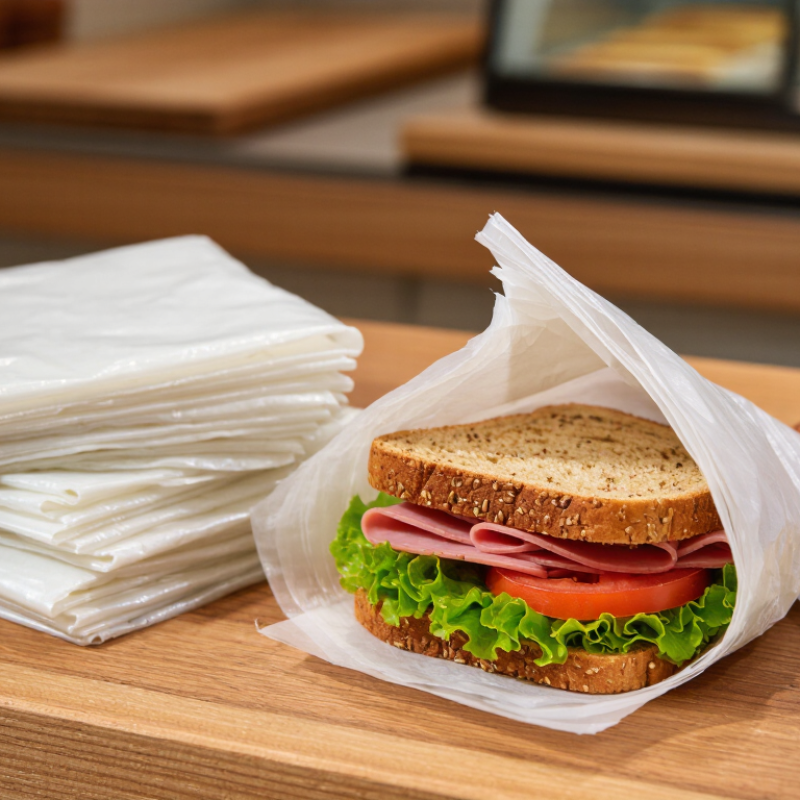
Wax paper food wrapping is thin paper coated with a moisture-resistant wax layer. The coating helps prevent food from sticking and reduces contact with air, crumbs, and light surface moisture. It feels smooth and slightly glossy between your fingers.
In daily kitchen use, wax paper works well for sandwiches, cookies, cheese portions, and dry snacks. I often place a sheet between stacked pastries to prevent them from clinging together. Fold the paper around the food, then secure it with string or a simple fold. It keeps a lunch neat inside a container, although it may not stop leaks from sauces or oily fillings.
Wax paper is not a perfect barrier. Its wax can soften when exposed to hot food, heavy grease, or direct heat. It should not be used in an oven unless the product instructions clearly allow it. For microwave use, check the packaging carefully, because formulations and safety directions can differ. A practical test is simple: wrap a cool, dry item first and inspect the paper after several minutes. If it becomes translucent, greasy, or loose, another food-contact material may be more suitable.
| Data Dimension | Description | Practical Food-Wrapping Guidance |
|---|---|---|
| Basic definition | Wax paper is paper coated with a thin layer of food-grade wax, which gives the surface a smooth, moisture-resistant finish. | Use it as a short-term wrapper or separator for foods that are cool or at room temperature. |
| Primary function | It helps prevent food from sticking to surfaces and limits the transfer of moisture and grease. | Place it between cookies, candies, sandwiches, burger patties, or other items that may adhere to one another. |
| Typical food-contact uses | Common uses include wrapping baked goods, lining containers, covering chilled foods, and separating portions. | Fold the paper around the food or use it as an inner liner inside a box, basket, or storage container. |
| Heat resistance | Wax can soften, melt, smoke, or transfer to food when exposed to high heat. | Do not use wax paper as a direct oven liner, under a broiler, on a grill, or in other high-temperature applications unless the product instructions specifically allow it. |
| Microwave suitability | Wax paper is commonly used to cover food during short microwave heating, but the coating and packaging instructions should be checked first. | Use it as a loose cover to reduce splatter; keep the paper away from direct contact with heating elements and do not use it for browning. |
| Moisture barrier | The wax coating provides limited resistance to moisture, but it is not an airtight or waterproof barrier. | For soups, marinades, very wet foods, or long-term storage, use a container or packaging specifically designed for leak prevention. |
| Grease resistance | Wax paper can reduce the passage of oils and fats, although very greasy foods may eventually penetrate the paper. | Use it for brief wrapping of pastries, fried snacks, or cheese, and add an outer container when extended storage is needed. |
| Freezer use | Wax paper can help separate frozen portions, but it does not provide the same protection as dedicated freezer packaging. | Use it between individual pieces, then place the wrapped food in a sealed freezer-safe bag or container to reduce air exposure. |
| Food visibility | Most wax paper is opaque or slightly translucent rather than fully transparent. | Label wrapped portions with the food name and storage date when contents are not easy to identify. |
| Common alternatives | Parchment paper is designed for higher-heat baking, while reusable containers and food-safe bags offer stronger sealing for storage. | Choose parchment for oven baking, sealed containers for liquids, and freezer-rated packaging for extended frozen storage. |
| Disposal and reuse | Wax paper is generally difficult to recycle because its coating can interfere with paper recycling processes. Clean, intact sheets may sometimes be reused for a similar low-risk purpose. | Follow local disposal rules, and discard paper that is heavily soiled, torn, or used with raw foods. |
Safety note: Always follow the instructions printed on the specific product, especially for oven, microwave, freezer, and direct food-contact applications.



 Jimmy
 Eric